
One of the easiest ways to add character within your garden is to repurpose vintage items in a way that is practical yet also charming - and keeps your space from looking like a sterile commercial garden center ad.
Below are are three vintage finds that may have started their life out with one purpose, but can live an entirely different existence amongst the flowers.
1. Old Metal Bed Frames
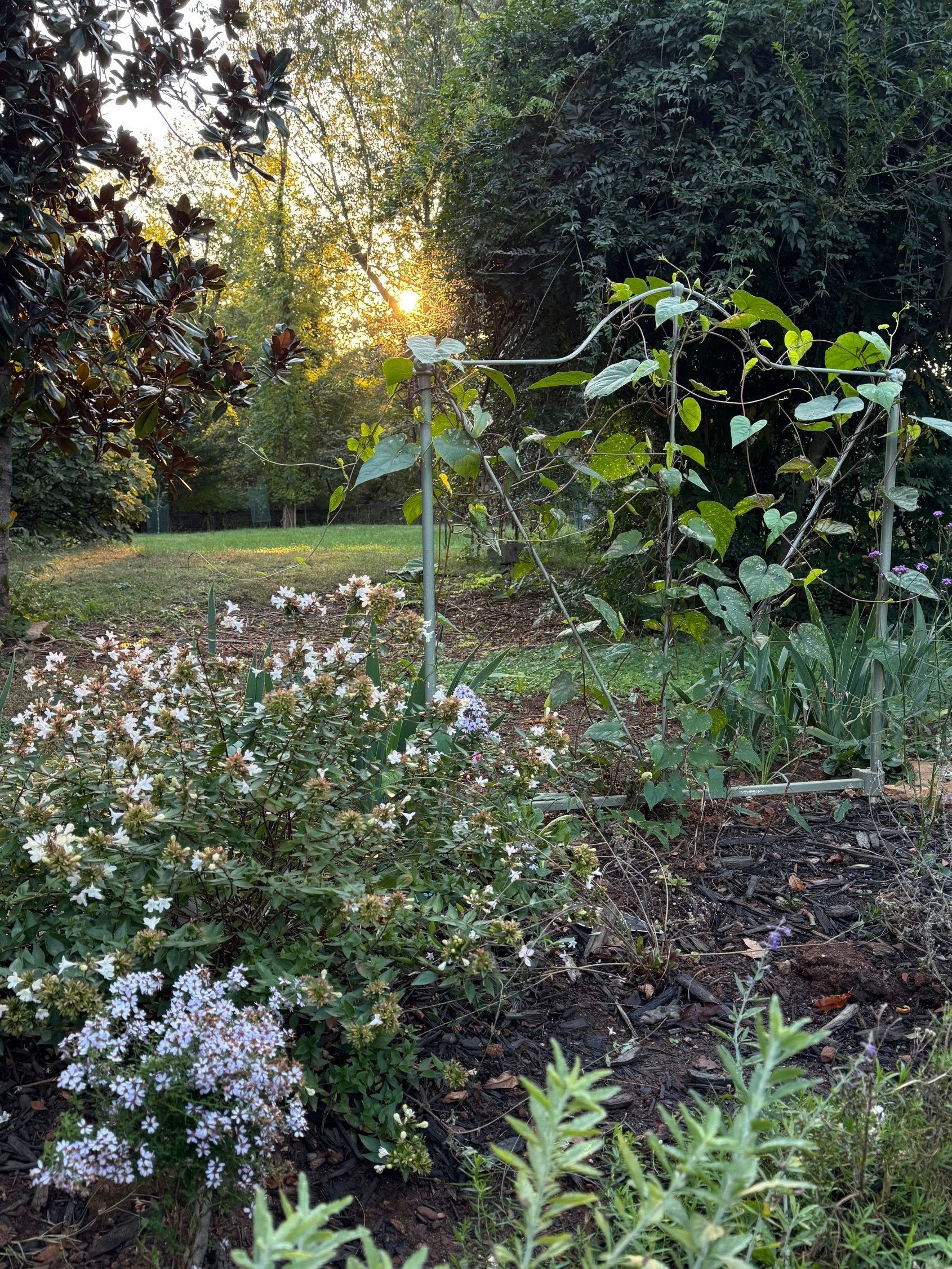
Old metal bed frames are surprisingly useful in the garden. I use them as low barriers, supports and trellises for climbing plants, where their weathered metal and decorative shapes add a bit of whimsy as well as structure.
The one pictured here is particularly special: it was my teenage bed and my first ever purchase from an antique store. I found it in an attice of the store and my dad re-made the pieces to hold up the mattress. Loved that bed, but turns out my girls didn’t. So instead of getting rid of it, I gave it another life in the garden where I can appreciate the memories it holds but also keep it useful.
2. Vintage Birdcages
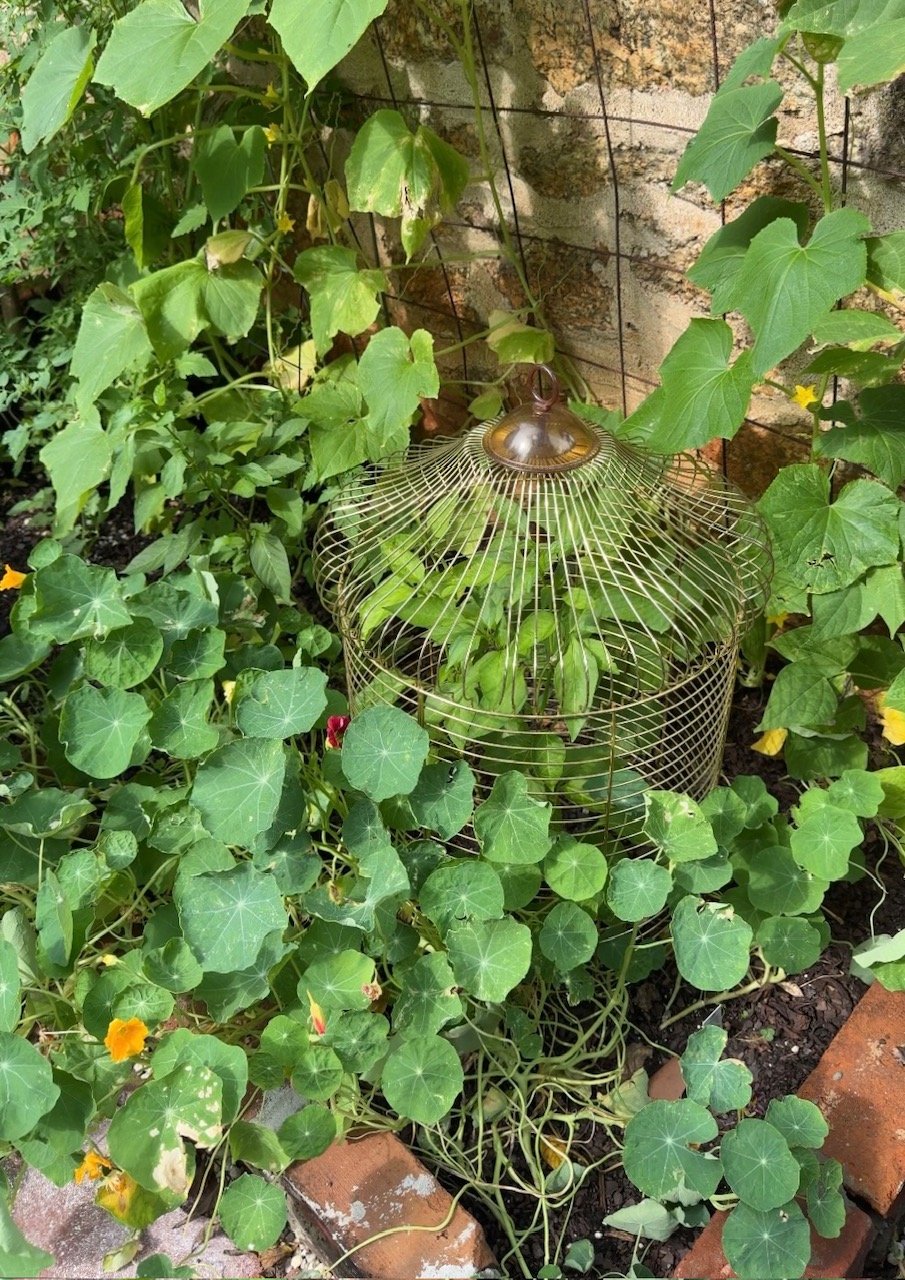
I've never been particularly interested in keeping birds in cages, but I do love finding old ones at flea markets and antique shops.
Placed over emerging bulbs or tender young plants, vintage birdcages make charming garden cloches, helping protect new growth from curious wildlife. Unlike vintage wire trash cans or laundry baskets, the open wirework of a bird cage allows sunlight and rain to reach the plants while adding a little unexpected character to the garden.
Tip: Be sure to look for sturdy cages that can be secured in place, without openings or mechanisms that might trap wildlife. But on that note of trapping wildlife, if you happen to find old traps that no longer work (or you know how to decommission them yourself), they can also be used for the same purpose as cages. An old raccoon trap is currently keeping my baby echinacea plants away from the hungry little rabbits that always find a way in through the fence.
3. Old Wooden Ladders
An old wooden ladder might not last as long as the metal items above, but its simple shape makes it very useful.
Propped securely among a planting bed, it becomes a ready-made support for sweet peas, climbing nasturtiums, or other flowering vines. I especially love the contrast of weathered wood against soft foliage and flowers.